
What's New  |   Blog
WhatsApp Chat

Effluent Treatment plant

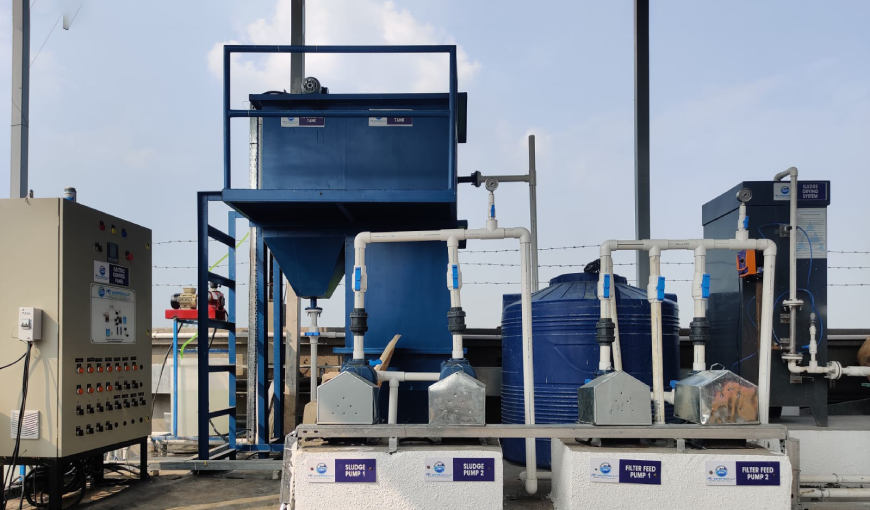
Effluent image

Effluent Treatment Plant (ETP)

An Effluent Treatment Plant is useful for wastewater treatment techniques and is also called the ETP. It releases pure water into the environment after removing the harmful substances and chemicals of the effluent and purifying industrial wastewater for reuse.

Depending on the industry, different elements can be found in industrial effluents. Some effluents contain grease and oily substances, while others contain dangerous substances (like cyanide).

Effluent Treatment Plant

The key component of treating industrial wastewater is the ETP Plant. The primary purpose of an ETP is to safely release treated industrial effluent into the environment or convert it into reusable water. According to government rules, every industry must establish ETP plants to treat its wastewater and waste materials to make them more reusable or safely discharge them into the environment.

Degradable organic contaminants can be found in the effluent of enterprises producing food and beverages. industrial wastewater contains various toxins, harmful chemicals, and pollutants, to clean the wastewater specialized treatment technology is needed like ETP.

The PTC WaterTech’s ETP Plant treats wastewater from a variety of industrial sectors, including chemicals, pharmaceuticals, dyes, refineries, dairy, ready-mix industries, and textiles, among others, using a variety of physical, chemical, biological, and membrane processes.

Benefits

  • Reduces environmental pollution by treating industrial wastewater before discharge.
  • Ensures compliance with government pollution control norms and discharge standards.
  • Protects natural water bodies and groundwater from contamination.
  • Enables water recycling and reuse within the plant, reducing fresh water consumption.
  • Minimizes operational costs in the long term by recovering usable water.
  • Prevents heavy penalties due to non-compliance.
  • Improves company image and demonstrates corporate environmental responsibility.
  • Removes harmful chemicals, heavy metals, suspended solids, and organic matter.
  • Easy to operate and maintain with modern automation.
  • Supports sustainable development goals and zero liquid discharge initiatives.

Features

  • Compact and modular design for easy installation.
  • Customizable capacity as per industry requirements.
  • Multiple treatment stages including physical, chemical, and biological processes.
  • Advanced sludge handling and dewatering systems.
  • Automated operation with PLC/SCADA-based control panels.
  • Low power consumption and optimized chemical usage.
  • Corrosion-resistant construction for longer equipment life.
  • Easy to operate and maintain with minimal manpower.
  • Meets stringent discharge norms set by pollution control boards.
  • Provision for treated water recycling and reuse within the plant.

Applications

  • Textile & Dyeing Industries
  • Chemical & Pharmaceutical Industries
  • Food & Beverage Processing Units
  • Paper & Pulp Mills
  • Oil & Gas Refineries
  • Electroplating & Metal Finishing Units
  • Leather Tanning Units
  • Automobile & Engineering Industries
  • Power Plants
  • Industrial Estates & Common Effluent Treatment Plants (CETP)